

Morning light. No rush.
Curtains open with your alarm. The bathroom is already warm. Daylight does the rest.
- Curtains
- Open with your routine
- Bathroom
- Warm before you are
- Lamps
- Off — daylight works


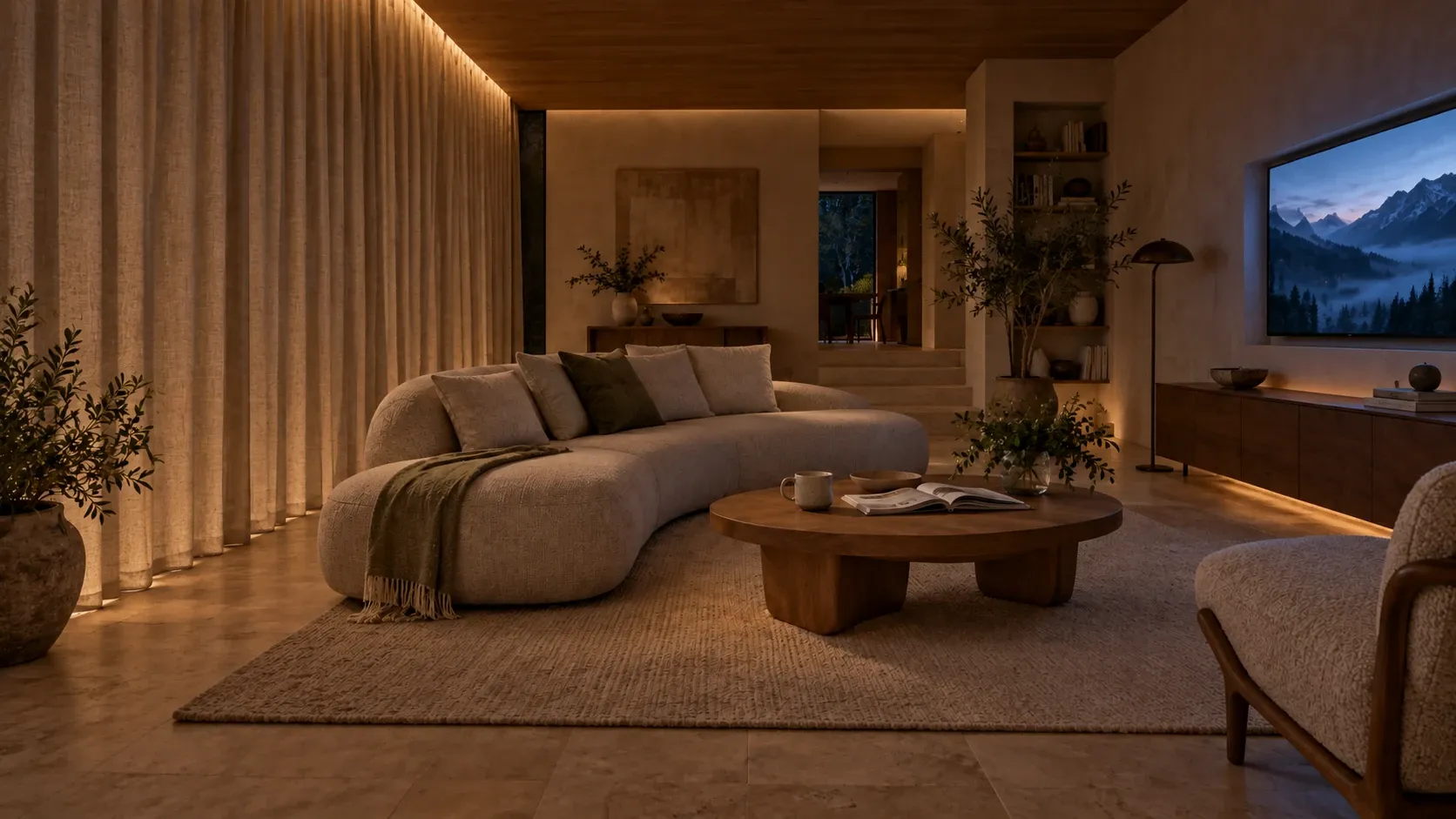
Hello.Your home, lit for the hour you are reading this.
We don’t sell gadgets. We compose light, warmth, quiet and safety into a single system — wired into the walls, run inside the house, and built to outlast the next app update.
Curtains open with your alarm. The bathroom is already warm. Daylight does the rest.
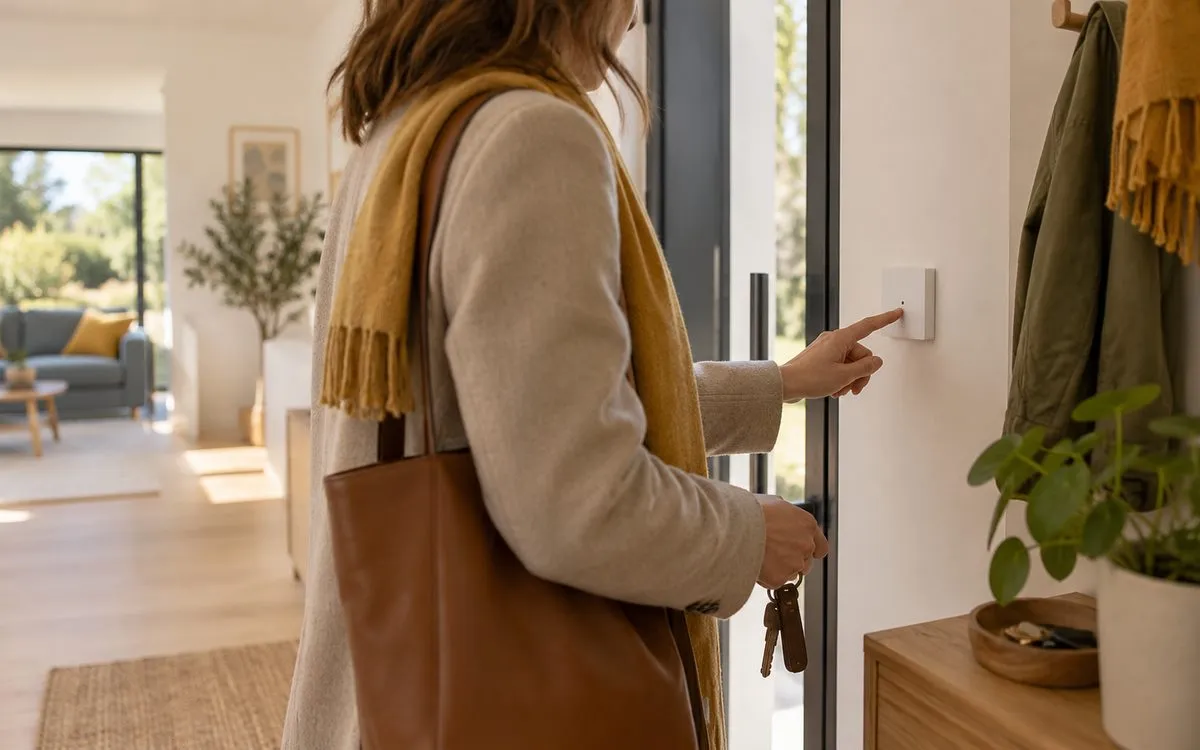
One goodbye button brings every check together — lights, sockets, doors, heating.
Walk in, put your bag down. Soft light, the right warmth and your playlist are already on.
One scene closes the curtains, dims the room and wakes the screen and sound.

Each system is good on its own. Played together — one wiring plan, one logic — they stop feeling like technology and start feeling like the house.
Bright enough to cook, warm enough to unwind, a gentle path at night.
DALI-2 · presence · daylight
Each room at its own temperature. Heating pauses when a window opens.
Per-room · ventilation · CO₂
Blinds follow the sun before the room gets hot.
Sun tracking · wind guard
Leak, fire and intrusion — the house acts first, then tells you.
Shut-off valves · alarm panel
Guest codes that expire. A door check from the sofa.
Intercom · gate · garage
Music in the kitchen, silence upstairs. A room built for cinema.
Multiroom · acoustics
Sunshine goes where it is worth the most — home, battery, then car.
PV · storage · 11 kW EV
Voice and camera analysis that stay inside your walls.
On-site AI · < 300 ms
Press a key on the wall panel. The same controller drives light, heat, shading, security and energy — so one touch is enough.
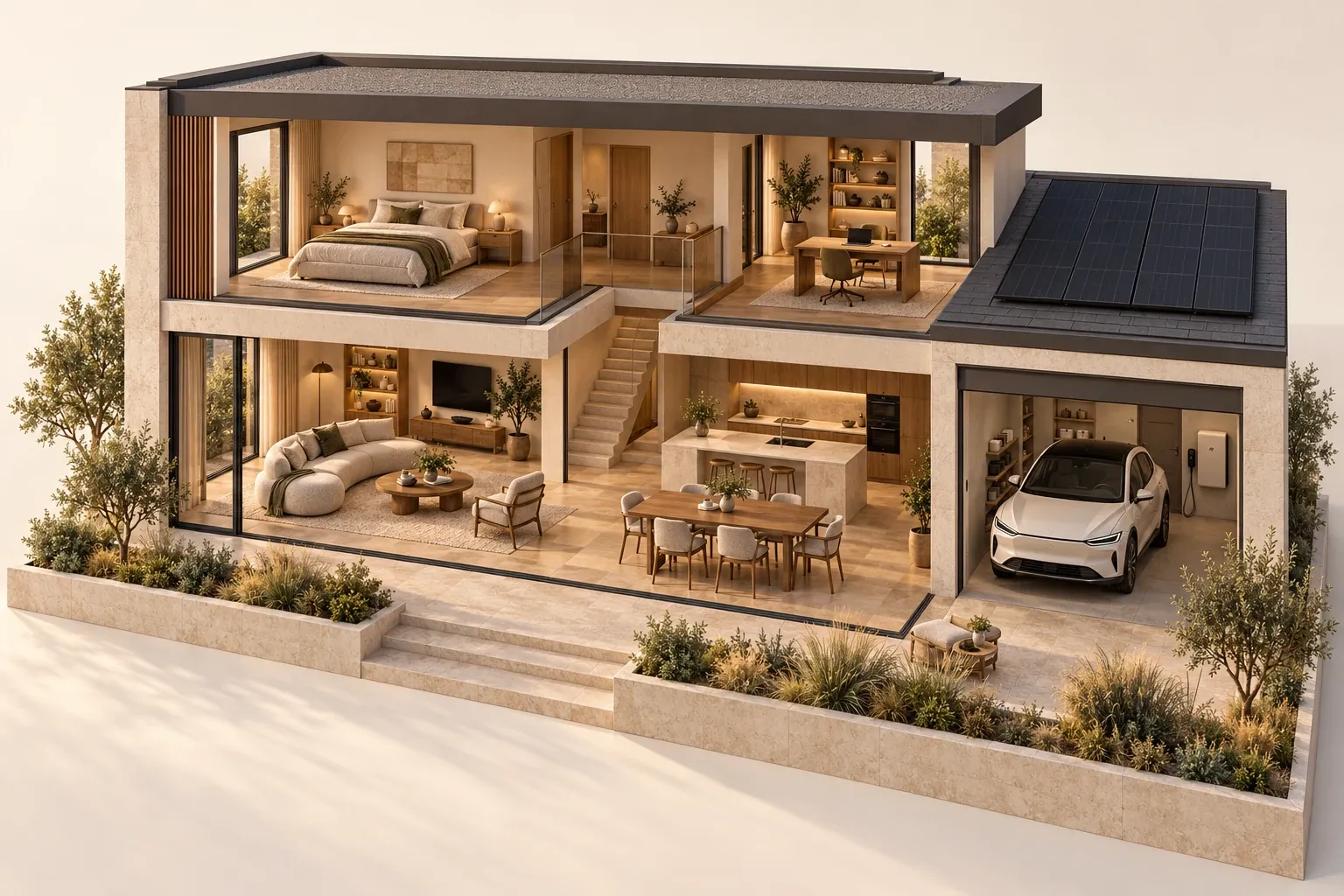
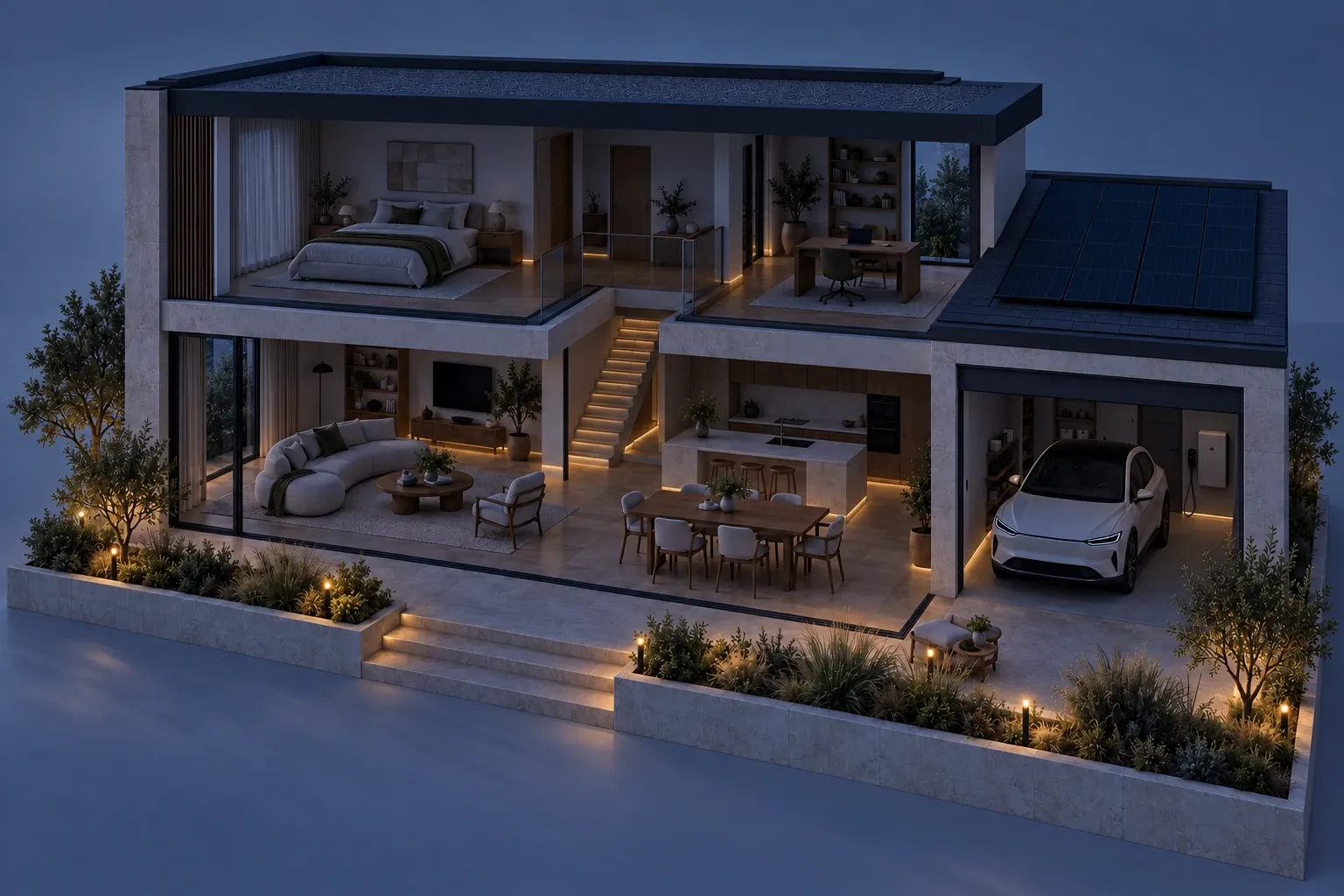
Six layers, each able to carry on when the one above it stops. Flip a breaker and see for yourself.
Main panel — flip one
All six layers online. Remote access runs through a VPN; notifications arrive by push.
| Situation | A box of gadgets | An engineered system |
|---|---|---|
| The internet goes down | Voice, scenes and remote control stop. | Everything inside the house keeps working. |
| A power cut | Devices reboot; some lose their pairing. | The battery carries priority circuits. |
| Five years later | The vendor dropped the product line. | Open standards; parts from many makers fit. |
| Something breaks | Nobody knows how it was connected. | As-built drawings, labelled cables, backups. |
Good protection is mostly quiet. It notices, acts, and sends one useful message — not a stream of alerts.

Case 1 of 3
One message, 02:14
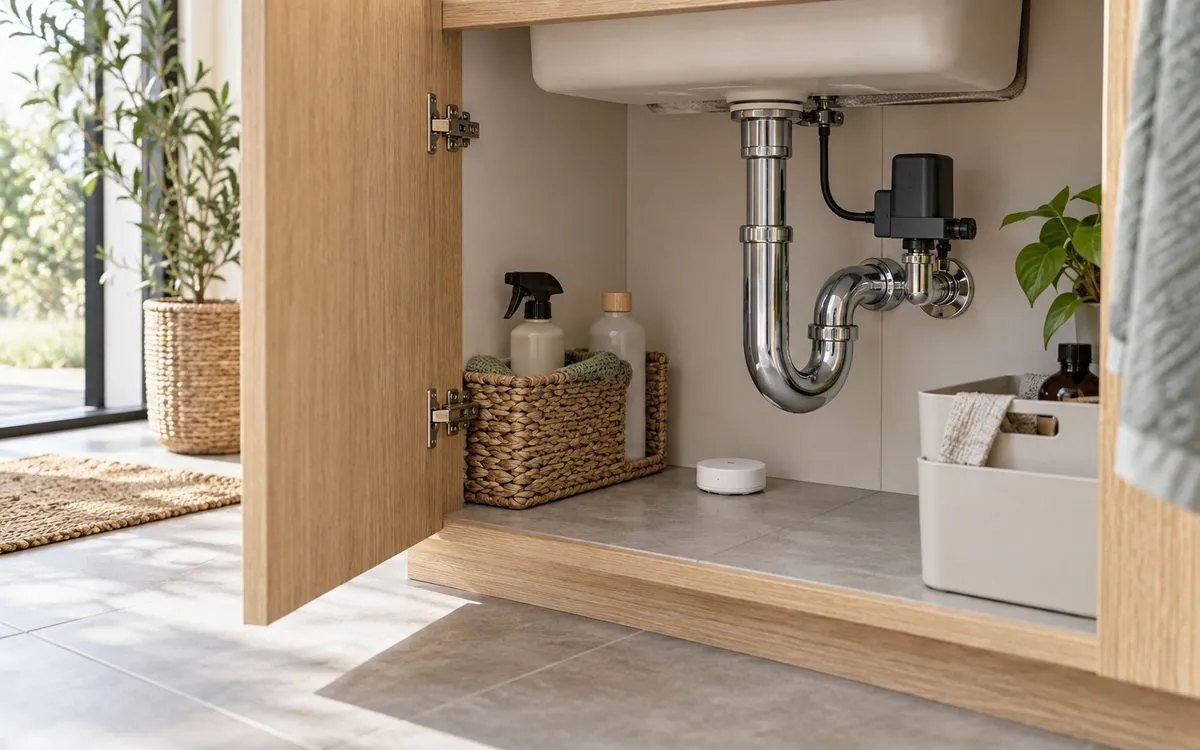
Water detected under the kitchen sink. Supply closed. Check in when you are ready.

Case 2 of 3
One message, 03:40
Person at the side gate. Garden lights on. Snapshot attached.
Case 3 of 3
One message, 14:05
Your guest arrived. Temporary code used at the front door.
Home first, then the battery, then the car — and only then the grid. Turn the hour and watch the house reallocate, every few seconds, without you.
12:00
Changing the hour also changes the light of the whole page.
Illustrative instantaneous power for a sunny day. Not a bill or a savings forecast.
Every stage ends with something you can hold — a drawing, a test report, a backup. When the walls close, you keep the as-built set.
We talk about how you live and what is worth doing.
Architecture, protocols, loads, cable routes, backup concept.
Every keypad, sensor and speaker placed with your architect.
Cabinets built, labelled and tested in the workshop.
Cabling and devices installed, photographed before walls close.
Logic, scenes and interfaces, mostly prepared off-site.
Every function tested — with no internet, no grid, no server.
Scenes tuned to your real routines over the first weeks.
Monitoring, updates and on-site service for years to come.
Tick what matters to you. We write the first page of the brief as you go — take it to any installer, or to us.
No. Familiar wall switches, a bedside button or automatic routines handle everyday things. A phone is useful for checking in, but it should never be the only way to turn on a light.
Not at all. Selected wireless sensors, smart heating controls and lighting upgrades suit a finished home. An installer should check your existing wiring first.
A system designed for local control keeps switches, scenes, cameras and alarms working. Remote access and streaming wait for the connection to return.
Yes. A leaving-home button, leak protection or a better bedtime routine are good first steps — as long as the cabling leaves room to grow.
That depends on your rooms, existing equipment and the routines you choose. Start with outcomes, then ask for a proposal covering equipment, installation, setup and support.
The last routine of the day
Press to say goodnight